
Introduction:
The 2.5 Urban Initiative celebrates artists who bring urban life to the forefront of their work, turning cityscapes into spaces of reflection, imagination, and transformation. This year’s winners shared their journeys, inspirations, and creative processes, revealing the depth of thought behind their award-winning pieces.
What inspired your winning piece, Transfigurazione?
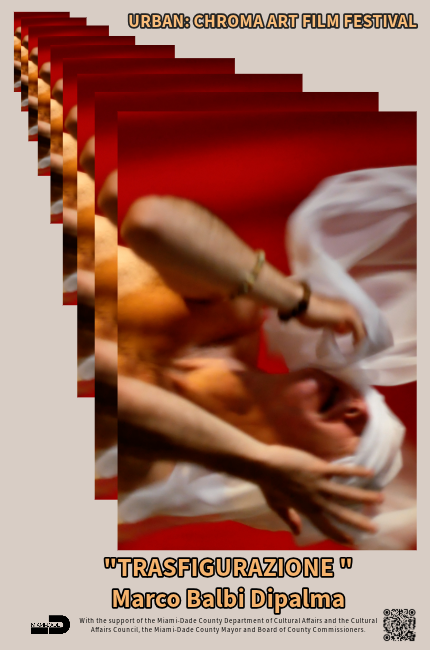
“Transfigurazione comes from an intensely personal and autobiographical place. It was created in my parents’ cellar shortly after I returned from Poland, where I had been living for three years to continue the paratheatrical research of my Maestra, Rena Mirecka. Her death marked the end of that chapter, and I had to return to Italy—a home I hadn’t lived in for 21 years.
This piece is inspired by Botticelli’s painting Transfiguration. Through the forms of my body, I sought to give shape to my pain and spiritual crisis. It became a cathartic process, turning grief and turmoil into something tangible.”
How do urban environments influence your creative process?
“While urban environments don’t appear directly in my videos, they inspire me deeply. I’m particularly drawn to abandoned urban spaces—they hold a certain mystery, a sense of time passing and neglect. These places feel like repositories of hidden stories, and they influence my artistic themes of identity and transformation.”
What was the process of creating this piece like?
“The video was shot in my parents’ cellar, which first needed some warmth added to the space. I started by finding a wall and setting up a red fabric as the background. Initially, I envisioned a full-length shot, but the limited space forced me to adapt, so I worked on my knees.
Using vintage lenses without autofocus added an additional layer of complexity. Lighting was the biggest challenge—finding the right balance of warmth and diffusion. I used a warm spotlight on my body and a car mechanic’s spotlight diffused under a reclaimed glass sheet. Light is always my primary challenge, and music often helps guide me through it.
The entire process was both challenging and rewarding. It was about finding creative solutions within limitations while remaining true to the emotional depth of the work.”
How does this piece align with the spirit of the 2.5 Urban Initiative?
“I believe the festival’s emphasis on bringing art into public spaces is transformative. Art in urban spaces invites people to pause, reflect, and connect with questions about identity and existence. My work echoes this spirit by offering a glimpse into ritual and daydreaming—creating a moment of transcendence within the routine.”
How has your art evolved, and what does this piece reflect about your growth?
“My art has grown to include more mediums—sound, text, and experimental short films. Transfigurazione was my first venture into video art, and it laid the foundation for a fusion of performance, photography, ritual, and sculpture that I’m now exploring.
This piece marked the beginning of my transition from performance-based work to existential and ritual video art. It reflects my journey of using self-portraiture as a tool for identity exploration, blending light and movement into something deeply personal yet universal.”
What advice would you give to emerging artists, particularly those exploring urban themes?
“Believe in yourself and never stop studying. Research is essential—it helps you uncover deeper aspects of your soul. Spend time in spaces where young people gather, share music, images, and experiences with them. These interactions can inspire your work in unexpected ways.
Above all, keep looking inward. True art touches the soul of the audience, and that connection comes from authenticity and self-reflection.”
What’s next for you after this project?
“I’m moving toward creating video installations, which I prefer to call light sculptures. These pieces integrate holographic projections of self-portraits, engaging with ambient light to explore themes of identity, suffering, and eros.
I’m also inspired to bring the spirit of the 2.5 Urban Initiative to my hometown of Varese. With my collective, we organize an event called All You Can Art, where we give artists 10 minutes to express their urgent creative ideas. I’d love to create permanent public video installations in urban contexts as well.”
What does winning the 2.5 Urban Initiative mean to you?
“Being able to exhibit my video in Miami is a dream come true. It’s a moment of profound happiness and validation. One of my aspirations is to have my work consistently exhibited in the United States. The festival’s presentation of my piece was deeply moving—it felt like a gentle affirmation that my research is moving toward the light.”
How do you see your role in inspiring the next wave of urban artists?
“I envision a world where video art replaces the advertising videos that dominate our urban monitors. Art should inspire, reflect, and investigate what it means to be human. At a time when artificial intelligence seems to overshadow human creativity, we need sentimental, artistic research that fosters a sense of community and being.
If my work can spark even a small reflection in others or encourage them to explore their own questions of identity, then I feel I’ve contributed to something meaningful.”